

A few days before last Saturday, I contacted bird guide friend Lukas asking if he’d bird the October Big Day with me around Isla Colón where we live. I knew my beloved Tranquilo Bay Eco-Adventure Lodge and bird guide legends Natalia & Ramon were covering the far end of the Archipelago so, all together, we’d each contribute to Bocas del Toro’s effort in recording an entire day’s worth of species. And by keeping an eBird list, we’d document and count all the birds we saw for the day with as many species as we were able locate. Meanwhile all over the world, birders were doing the same thing, all part of a worldwide effort.
October and Global Big Day is done by thousands of people around the entire globe. Birders from every country head out into the field to count as many of the birds out there that they can between 12 midnight to 11:59pm, giving birders an entire 24 hours to count as many birds as they can muster and post their findings on their eBird accounts.

This special October Big Day was added some time after the annual Global Big Day in May, which falls on Global Migratory Bird Day. Cornell Lab of Ornithology began Global Big Day in 2015 and became such a success they now hold a big day in October when the birds are also migrating, but this time of year they’re headed south for the winter. These specifically chosen days are a result of Cornell Lab of Ornithology’s intent to spread interest in the natural world around us and at times of year when the many birds are moving in big numbers between breeding grounds and wintering grounds.

Bird movements and populations can tell us so much and by documenting all sightings from folks counting all over the globe, we can gain a worldwide snapshot about about their movements, populations and compare these numbers across the years. All together, these counts are a global effort to know more about the birds around us and this important data collected can help researchers develop conservation policies to protect birds in their native habitats, some of which span across continents.

Birds can tell us a great deal about the ecosystems they rely on and particularly, by holding the big days during migration, is that migratory birds can give us an idea of where they are and when or if they’re making movements based on loss of habitat and refueling station availability along their thousands of miles, twice a year endeavor. In some cases with awareness and education, combined eBird data has helped provide habitat as bird researchers work with farmers to leave their fields fallow and flooded while the shorebirds move through and feed. Birds completely rely on stopover sites to feed and rest and when they reach a historical site and it’s no longer there (often due to human activity), that could mean life or death for these birds that so rely on intact habitats along their route as they use up their reserves in these long-distance flights.

eBird is where birders input their sightings. Anyone can download the app and head into the field and list what they hear and see, what they can identify. That information is valuable and the more the better so that we can start to see trends of what birds are where at what time of year..all of this adds toward a wider knowledge base as more and more birders have started to contribute their sightings and add to the growing base of knowledge around all the different species, worldwide. And eBird doesn’t have to be just for birders, newbies are encouraged to download the app, anyone can! A great resource is the Merlin app for identification. Then you can start your journey toward learning what species live near you or in places you travel. I like to say eBird is kind of like Pokemón: You gotta catch ’em all!
To get a better idea of eBird and how engaging it can be, visit my blogpost eBird: Gotta Catch ’em All! eBirding, as we call it, can become a game, challenging yourself to beat your goals and it might even be an instigator for folks to enjoy the game of listing and maybe therefore turning more non-birders into birders! And better still, you instantly are participating in citizen science as the Cornell database collects this important information and can tell us statistics based on so much data. One of my favorites is the animated migration maps where you can watch the movements of birds simply because they’ve been documented by eBird by enough people from one continent to another to show how, where and when these birds are moving.

We had a fantastic day, first birding Lukas’ nature refuge of a home and then we drove to the far side of the island and met up with captain and birding extraordinaire Enrique. He reminded me of my captains at Tranquilo Bay! So much enthusiasm and eyes that I will have. He is an indigenous N’gobe and it was such an honor to bird with him, not to mention Beny, a Panamanian Legend along with phenomenal local guide and good friend Lukas. It was such a group effort, so much fun to be surrounded by good friends and bird lovers, a brilliant day together as we all called out birds while Enrique drove us slowly up the Changuinola Canal.

We got out at the Changuinola River mouth and picked up some shorebirds, most of which were migrants along with the lovely, local Collared Plover. And would you believe it, Beny got a lifer!!! It was the Pinnated Bittern which we’ve been starting to see in the past couple years, he was beside himself with joy as he snapped foto after foto of the beautiful marsh bird with its skyward pointing beak, such a beautiful and uncommon sight. It was wonderful to see his excitement as if this countrywide birding legend was an overjoyed, brand new birder.

At the mouth of the river we saw a neotropical river otter crunching away on crabs and we got out on the beach. It wasn’t just for the shorebirds, Beny set up his camera so that we could witness the solar eclipse. It was incredible to see and I held my binoculars upsidown to follow the movement of the moon in the reflection on the sand. We watched the moon move across until the it was completely in front of the sun, creating a wild ring of fire, we all were beside ourselves..what a day!!

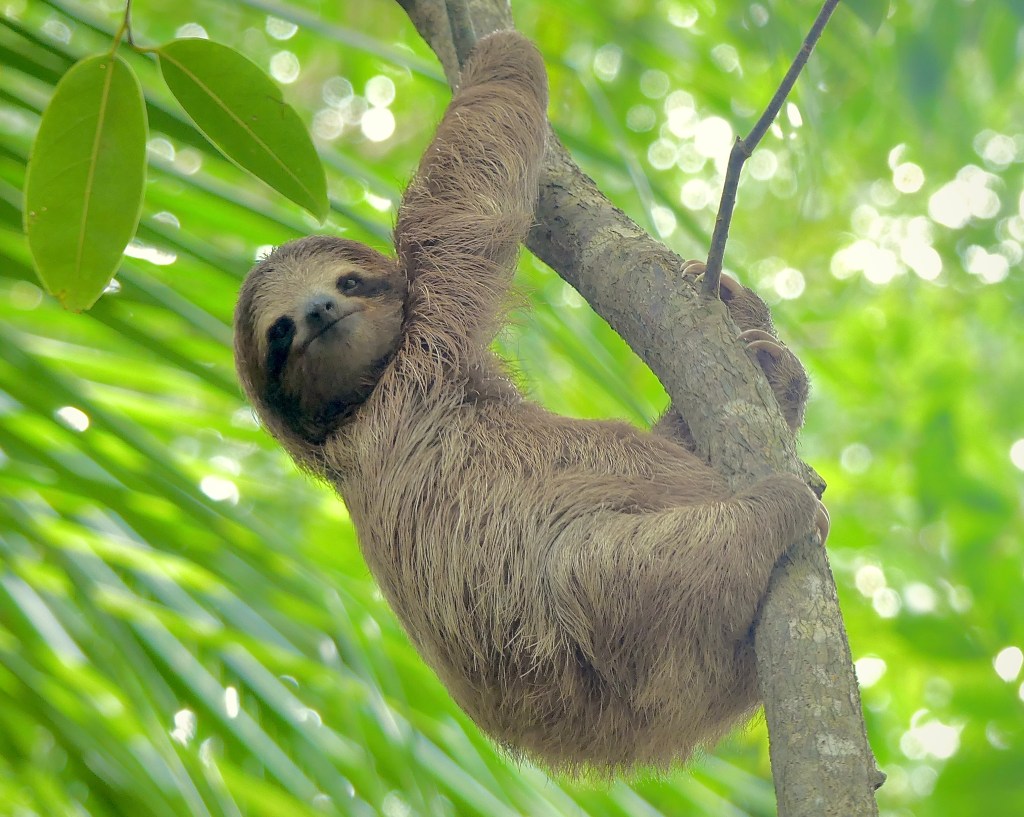
Not to mention I spotted this little sleepy ball of fur up high in the tree above the canal. This is a Northern Tamandua, a kind of tree-climbing anteater. They love to use their huge claws (very sloth-like) to tear into termite mounds for their favorite meal. You always see other wildlife when you’re out birding, it’s never a lost cause if the birds don’t show as long as you keep your eyes open! We also saw a number of sloths, both three and two-toed and, with the warm, mostly sunny day lots of iguanas on the treetops. Oh, how I love the tropics!
We finished our day by heading out to beautiful Bird Island (Swan’s Key, Isla de Pajaros) where we picked up the Red-billed Tropicbird. This is a special favorite of mine because of a bird named Troppy. It was Maine is where I first encountered a Red-billed Tropicbird, believe it or not and he came back each summer for more than 15 years! So, Isla de Pajaros sounds like Maine to me!
So tropicbirds aside, Team Eclipse turned out to be an uber-sucess, we ended the day with a whopping 127 species! Not to mention the honor of birding with these phenomenal birders who I’m so, so fortunate to call friends.

“Never before has this much information about birds been gathered on a single day. This phenomenal achievement belongs to every single person who took part. Thank you.”
-Cornell Lab of Ornithology, Oct. 2023

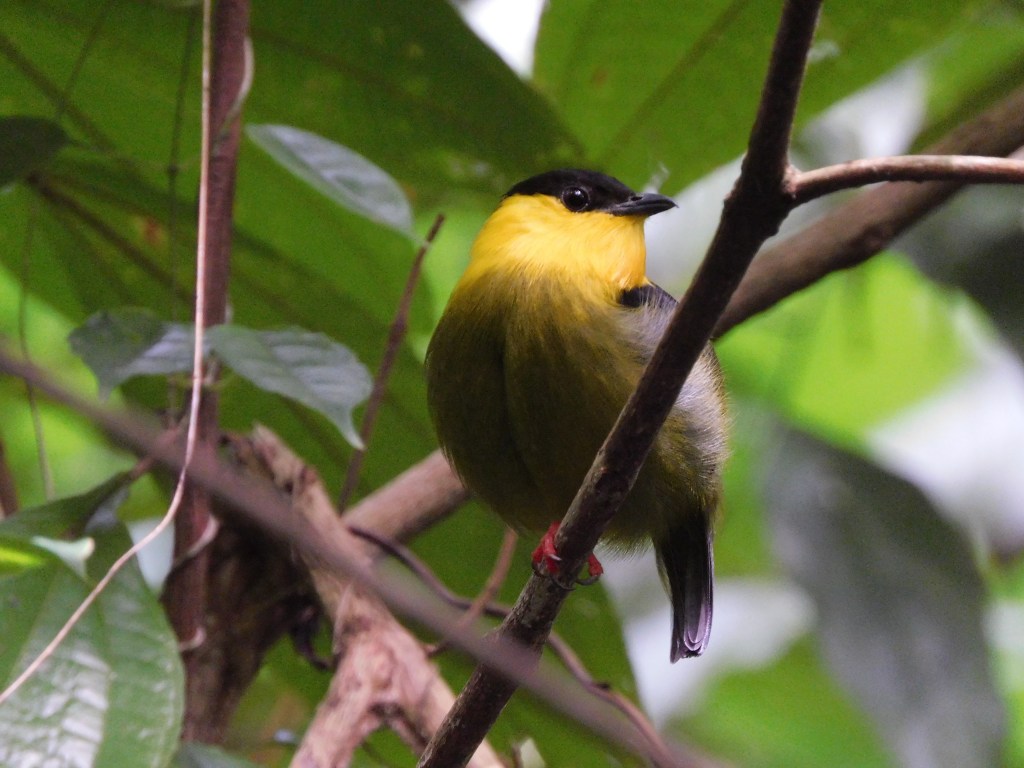
I love this advertisement of our last big day, The Global Big Day held each May. Once these birds have made it all the way down here to the tropics when they flew south for the winter which they spend these months gorging on fruit. In May they’ll be heading back north to spread out, find and protect a territory, find a mate, make a nest, have a chick, raise it to fledgling and then tell the little fledger “It’s time to head south!”
And oh what a journey these intrepid little sprites make, every single year, down and back, a bird that might not even weigh more than a quarter or two. Flying such distances, these neotropical migrants help us gather more and more information the state of a host of ecosystems from temperate to sub-tropical to tropical, all of which we depend upon deeply.

Leave a Reply